To select the right robotic cleaner, you must first understand the specific aspects of the pool. A robotic cleaner is a significant investment. Its performance depends on how it's customized to your particular pool. If you don't pay attention to these aspects, it could result in a faulty cleaning system, possible damage to your pool or robot and ultimately, buyer's remorse. This guide will highlight the top 10 requirements that you need to know prior to purchasing the pool.
1. Primary Surface Material
This is without doubt the most important aspect. The kind of brushing device the robot employs will be determined by the level of finish in the pool.
Concrete/Gunite/Plaster (including Pebble Tec & Quartz): These are rough, durable surfaces that often develop algae films. They require a robotic system equipped with hard bristles (often coated with nylon or vinyl) brushes that are able to aggressively scrape and scrub the surface in order to break up biofilms that have been embedded and dirt.
Vinyl Liner: Vinyl, a soft and flexible material, is easily punctured. A robot made for vinyl needs wheels that are smooth and non-sharp as well as soft, nonabrasive brushing (typically vinyl or rubber). A cleaner that has hard brushes for concrete can cause premature wear of the liner.
Fiberglass Fiberglass is a shell with the smooth exterior of a gel-coated, smooth surface. Materials that are abrasive can scratch vinyl. Robots with soft rubber brushes, or brushes that are not abrasive are the best. Robots also be more efficient and effective in cleaning with more smooth surfaces.
2. Shape and Complexity of the Pool:
The layout of your swimming pool will determine the level of navigation and cable size required.
Freeform or rectangular? A rectangular pool is the easiest to maintain. It is cleanable by the majority of basic robots that follow randomly-routed routes. Simpler robots may be unable to navigate the curves and coves of freeform, kidney-shaped or L-shaped pools. In these situations, a robot equipped with advanced algorithmic navigation (gyroscopic or smart-sensing) is strongly advised to guarantee full coverage.
Coves and Ledges: The transition where the pool floor meets the wall (the cove) is a common spot for debris to be deposited. Check that the design of the robot permits it to clean this curving region. Also, ensure that the pool is large enough with flat ledges and sun shelves (Baja shelves). Certain robots are designed only to clean walls and floors.
3. Pool Dimensions (Lengths widths, lengths, and the maximum depth)
These measurements aren't negotiable for selecting a model with an appropriate power cable.
Length of the Cable. As a rule, the robot's cable must be at a minimum the length of the biggest dimension of the pool (normally the length). You can add a few feet to allow routing along the length of the pool, and to keep the power source away from water. For medium-sized pools 60-foot cables will be sufficient. Before purchasing, take a measurement of the length of your pool.
Depth Capability - The majority of robots today can clean up to a depth of 8-10 feet. If you have a pool with a depth greater than 10 feet, you will be required to verify the maximum power of your robot. Infringing on this limit could cause damage to the motor of the pump, and may void your warranty.
4. The Level of Water and the Tile/Coping Information:
The water's interface with the structure of the pool is a crucial zone to be cleaned.
Waterline Tile Cleaning: This is an important feature for robots that are middle- to high-end. If your tile, stone, or glass exhibits persistent waterline scum, you need a robot known for its outstanding waterline cleansing capabilities. This usually involves a slightly different pattern of climbing and a brush action at its top.
Coping Material Materials that is used to cover the pool wall can be stone, concrete or pavers. It could entrap the cables of a robot when it has an aggressive and sharp overhang. Remember this when you are routing the cable.
5. There are numerous things to do and obstacles to avoid in the pool.
A pool that is free of debris and hazards is much easier to clean.
Main Drains/Vents - Check that the vents' covers are flush with the floor and are securely secured. Some older, protruding drainage can trap smaller robots. Floor water return vents generally aren't an issue.
Steps, ladders and Built-in Seating can all disrupt the robot's routine of cleaning. Ladders placed on the floor may trap a robot. If robots want to wash up and climb up steps and benches they require sufficient power. These areas may be avoided using simple, random navigation robots, but more sophisticated models can manage these areas.
These huge, flat surfaces must be cleaned similarly to steps. Make sure that the robot can effectively traverse a horizontal surface.
6. Points of Entry and Exit (for Robots)
Think about the possibilities of how you will get the robot out of the water.
Physical Access: Do you have to carry the robot up a set of stairs or across a deck then lower it into place? The weight of the robot is an important aspect. A robot that weighs 25 pounds is easier to manage on a week-to-week basis than a 40 pounder. A storage caddy is practically essential in this scenario.
Robots for above-ground swimming pools Though less well-known there are robots that are specifically made for above-ground pools. These machines are light, and they're not designed to climb over walls. They are built for the ground and lower portions of walls.
7. Debris Types and Volumes
The robot's characteristics are defined by the "job" it will perform.
If this is the primary concern for you then the filtration system will be crucial. It is essential to have a robot with fine cartridges for filtering.
Leaves (including twigs), acorns, and acorn twigs: To manage larger amounts of debris, you will need a robot that is equipped with a large bag or canister for debris and a pump that is powerful enough to eliminate it, and a filter that isn't blocked. Certain models with higher-end features include impellers specifically that are designed to process larger leaves in order to avoid blocking.
8. Locating the Source of Power Source and the Outlet Type
Robotic cleaning machines are powered by low-voltage DC energy that is supplied through an adapter which plugs in to a standard socket.
GFCI Outlet Requirement - The power supply must plug into an GFCI Outlet. It is not negotiable. You'll need an electrician to set it up should you not possess one.
Distance from Pool: The transformer should be located at least 10 feet away from the edge of the pool to protect it from splashes and weather. Make sure your cable can reach the furthest point of the pool from this point.
9. Local Climate Environment and Storage Environment
The way you keep your robot will impact its life span.
Storage off-season: The majority of manufacturers expressly warn against storing robots under water or in direct sunlight for extended periods. UV rays damage cables and plastics. If you do not intend to use the robot for a long duration, it's best to keep it in a dry, cool location.
Use the Robot During the Season: If your robotic is often used it is advisable to think about a storage caddy which allows you to keep the robot neatly close to the pool. You will not have the cord get caught on the deck.
10. Current pool filtering and circulation:
Although a robot is autonomous, it exists within your pool's ecosystem.
Complementary Function - Understand that the main function of the robot is to remove debris from surfaces and remove any accumulated dirt. It isn't a replacement for the pool's main circulation and filter system. These systems are responsible for filtering dissolved particle, distributing chemicals, as well as keeping algae out. Robot cleaners are an additional system that significantly reduces your pool's primary filter burden.
Chemical Balance: A prone to algae pool surface, even when it is perfectly free of algae, is still affected by unbalanced water chemistry. The robot may help to maintain the cleanliness of your pool, but it will not substitute for proper sanitization or the balance of your water. Check out the top pool-reinigungstipps for more advice including robot to clean the pool, swimming pool com, swimming pool vac, a swimming pool, discount swimming pools, pool skimming robot, in the swimming pool, swimming pool cleaners, technology pool, the pool cleaner pool sweep and more.
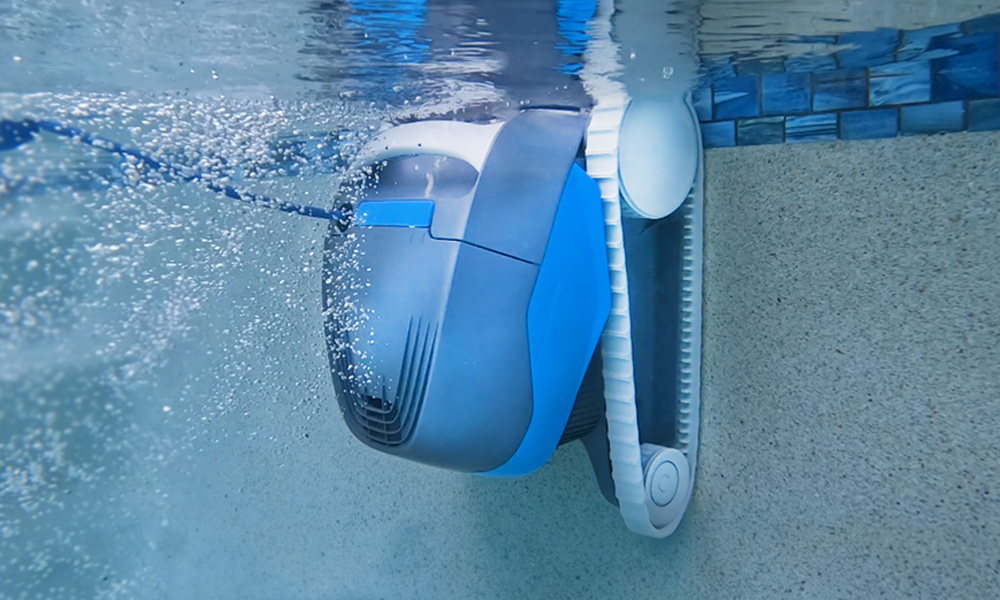
Top 10 Tips For Pool Cleaning Robots That Are Easy To Use And Maintain
Although cleaning could be the main goal but the ease of maintenance and operation of a robot pool vacuum is what defines the day-to-day experience. A machine that isn't easy to handle, clean or store can quickly turn into a source of discontent, negating the convenience it promises. These factors determine whether the robot will seamlessly integrate into your pool care routine or if it becomes a separate chore. A user-friendly design is essential to long-term satisfaction.
1. The Critical Handling and Weight Test:
The most common interaction you will have with your robot will be lifting it up and out of the pool. The weight is crucial.
The weight range of robots is available in a variety of weights ranging between 15-16 pounds. to 35-40 pounds. Although heavier models are more robust and sturdy, they may also be more difficult to move. This is especially true when the surface of the machine is wet or slippery.
Handles and Grips. Check out the style. Are there any good-looking, comfortable handles that give you a secure grip? It is unsafe and difficult to use A poorly-placed single-handle on a heavy object makes it difficult to move. This is a crucial physical ergonomics feature.
2. The Non-Negotiable Top-Loading Filter System:
This is the main maintenance aspect. After lifting the robot off, you must access the filters. Top-loading models allow you to quickly clean dirty filters without having to turn the robot over. Flipping an unclean bottom-heavy machine is a cumbersome, messy process which can lead to debris spilling into your deck or pool. Top loading is simple to do, fast, and efficient.
3. How do you prolong and maintain the life of your filter cartridges
Maintenance of filters is a regular task.
Easy Removal: Pleated papers and fine mesh cartridges need to be removed easily from the housing. You should thoroughly rinse them using a hose until water is clear and all dirt has been eliminated.
The paper cartridges degrade over time with repeated washing. They should be replaced once or two times a year, based on the frequency you use it. The cartridges with mesh that are made from better quality materials last longer and usually for a longer period of time. It is important to consider this price when you are making a purchase.
4. Swivel Cords Are a Must:
This feature minimizes the chance of the cord becoming entangled. Tangling is a major user-friendliness issue. A swivel mechanism, where the cord connects to the robot or to its floating it allows for 360-degree rotation when the robot shifts direction. The cord will eventually twist on itself and become knotted. This would reduce the range of the robot by an enormous amount, cause it to get stuck and damage the internal wiring.
5. The Value of a Caddy that changes everything:
A cart for storage isn't an accessory, but a major upgrade to make it more user-friendly.
Transport: You are able to wheel the robot towards the pool without needing to carry its entire weight.
Storage: It has an area specifically designed to store your robot with the cord neatly wrapped. It is kept clear of dust and UV damage even when you're not using the device. It is also a way to prevent the robot from sitting in direct contact with the surface which protects its components. Caddy models are a symbol of a firm's commitment to provide the best user experience.
6. Cable Management and length:
The power cable is the most important component of the system.
Affordable length: The cable has to be flexible and long enough to reach the furthest point of your pool from your GFCI. You can extend a few feet by measuring the longest side of your pool, and connecting it to the deck. Cables that are too short cause the robot to be useless.
Floatation should be provided by foam floating floats equally distributed across the length. This will stop the cable from sinking and getting sucked into the tracks or drives of robots. This can lead to injury.
7. Cleaning Cycle Simplicity and Control
The interface for operating the robot should be intuitive.
On-Unit controls vs. Remote: Basic models may only have one power button. Certain models come with an app for smartphones or a remote control to select cycles. You can choose between a simple button or the remote control, which comes with advanced programming.
Clearness of Cycles: The types of cycles that are available (Quick Cleaner Full Cleaner, Floor Only) must be easily identified and labeled. The robot must provide an easy-to-read feedback (e.g. blinking lights, or beeps) to verify that it has started.
8. Brush and drive Component Access, Wear and:
Although it's not something you regularly do, your tracks and brushes wear out.
Inspection: Check the brushes regularly for wear indicators (e.g. bristles becoming shorter and stiffer) and then check the wheels or tracks for indications of getting worse.
The ease of replacing parts is a major advantage. Check whether the manufacturer offers replacement brushes, belts, or tracks, and make sure the directions included in the user's manual are clearly written. This will prolong the life of your device as well as lower the cost of professional maintenance.
9. Physical Storage Requirements:
You need to have a space in which you can keep your robot.
Space Robots, their power supplies, and the coiled cable must be stored in a space that is cool dry and shaded. This could be a shed, garage, or other space that is enclosed. Keep it out of the direct light. UV radiation will cause the plastics to degrade and weaken the cable sheathing.
Off-Season Storage: For long-term storage in winter, the unit needs to be thoroughly cleaned and dried. Manuals will offer specific directions and frequently recommend that you store the unit with a particular orientation to protect the internal components.
10. The User Manual Ecosystem and Customer Support:
Help and documentation are important to ease of use.
Clarity of manual: A well-written manual that is clear on troubleshooting and error code explanations along with diagrams is vital to resolve minor issues.
Support Accessibility Check the brand’s reputation in the area of customer support. Are you able to find the site helpful do you have an FAQ video tutorial, or copyright? For a great experience, it's essential to have access to knowledgeable support when there is an issue. See the best robot piscines pas cher for more info including pro pool cleaner, discount swimming pools, the pool cleaner, swimming pool robot, max pools, waterline cleaning, swimming pool sweeper, cleaning robot for pool, swimming pool com, pool automatic vacuum and more.
